Monday, October 3, 2011

TEA NURSERY

I have taken quite a while since my last post but this is due to an internet breakdown at the office but I am glad that it has been restored and we can share more on farming.
Today I would like to farmers who are venturing into tea farming and to be more specific, those preparing a tea nursery.

A tea nursery well protected

There are various sizes of tea nurseries but I would like to narrow down to a manageable size of 14feet (length) by six feet (width).
Your nursery should be sited near a water source, proper security, labor as well as a pest and disease free area.
You also require fitos, nails and dry grass to prepare a shade as well as vegetatively propagated (VP) plants and fertilizer (DAP, NPK )

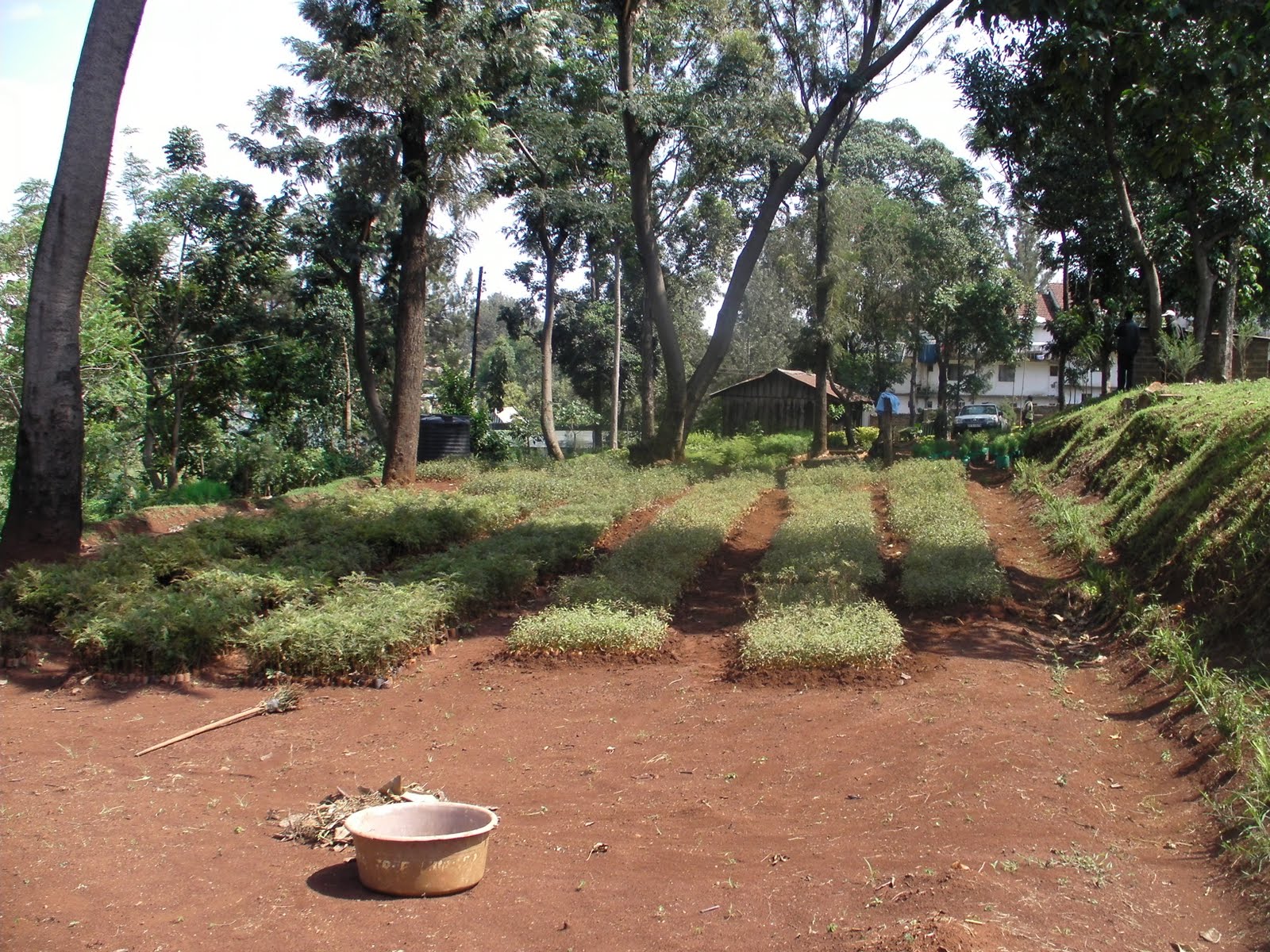
A demonstration of various stages in a tea nursery
One unit can carry up to 1200VP plants which should be constantly watered and ensure you do thorough disease and pest control.
Your seedlings should be ready for transplanting after six months

STOREY KALE GROWING

I greet you all hoping you are doing well with your farming activities. Today I will like to tackle an area that is currently picking up among town residents.
Given the escalating prices of basic goods and vegetables, we find ourselves forgoing other lucrative expenses so as to put food on the table.

A storey of kales on a sack of soil
The little space you have can be turned into a storey farm simply by stacking soil in a sack and growing some vegetables like kales on it.
All you need is fertile soil probably from your rural home and you are good to start off growing your own greens without having to till land.
The seedlings are planted from sides round the sack and watered from time to time which is an easy task.
Next time you go the rural home, remember to carry a sack of soil alongside that sack of charcoal.

Friday, September 23, 2011

USE FARMYARD MANURE


Most farmers run to stores to obtain fertilizer during planting seasons. Little do you as a farmer know that farmyard manure in the most commendable for your crops.
Farmyard manure can be prepared by collecting your animals waste and placing it in one place in readiness for farm application.

Manure in a banana plantation awaiting farm application
The most ideal place for preparation of your manure is in a banana plantation. If you are rearing chicken, they will help you in turning your manure over and over.
This helps you with weeding your banana plantation as they clear all the weeds from your farm.
This manure is chemical free and will naturally enrich your farm for better produce.
Try it out.

Tuesday, September 20, 2011

DON'T GET FIREWOOD FROM YOUR TEA FARM


Tea is a major cash crop among farmers both large-scale and small-scale. This means the much care you give unto you crop the higher you will reap.
Other than other professional means of ensuring the yield increases, fertilizer application is crucial to add nutrients to the land under tea farming.

Prune remains left to be manure in a tea plantation

As a tea farmer avoid collecting remains from tea pruning in your shamba as this add up to the fertility of your land and subsequently improve tea yields.
As a small-scale farmer, avoid temptations of picking firewood from your tea plantation.

Monday, September 19, 2011

RESPECT YOUR HEN


Local chicken are easy to rear as they do not require much care other than providing them a warm place to sleep during the night and ensuring that they do not destroy your neighbor’s crops.
There is one unique thing about local chicken which you need to know so as not to enter into enmity with your chicken.

A hen laying an egg
 A local chicken finds a serene environment to lay her eggs in preparation to have a generation meaning this selection is carefully done.
In most cases the cock will accompany the hen to locate a favorable place to lay her eggs away from enemies.

Eggs on a nest
Once if finds the ideal place, it starts to lay the eggs and counting them one after another each day as it leaves and enters the laying nest.
A strict hen will not entertain disturbance on her eggs. Every time she leaves the nest after laying an egg, she carefully examines the position of her eggs and when she returns the following day, she does the same.

A hen with her chicks
 Once she discovers interruption on her eggs she will sound a warning and give a benefit of doubt but on subsequent discovery of disturbance, she will decide do quit and find another location to lay her eggs.
A hen and a cock enclosed in cage withing the farm
If she doesn’t find a place within the house, he may choose to try her luck outside the house and this exposes her to more risk.
Kindly respect your hen’s eggs. Do not be an early predator please.

Friday, September 16, 2011

UPGRADE BREEDS USING ARTIFICIAL INSEMINATION


Local breeds are a better option to most small-scale farmers who prefer them due to their disease resistance and relative feed consumption.
It saves you as a small-scale farmer a lot of energy and resources which you could use to restore the health of your animals and get enough feed for them.

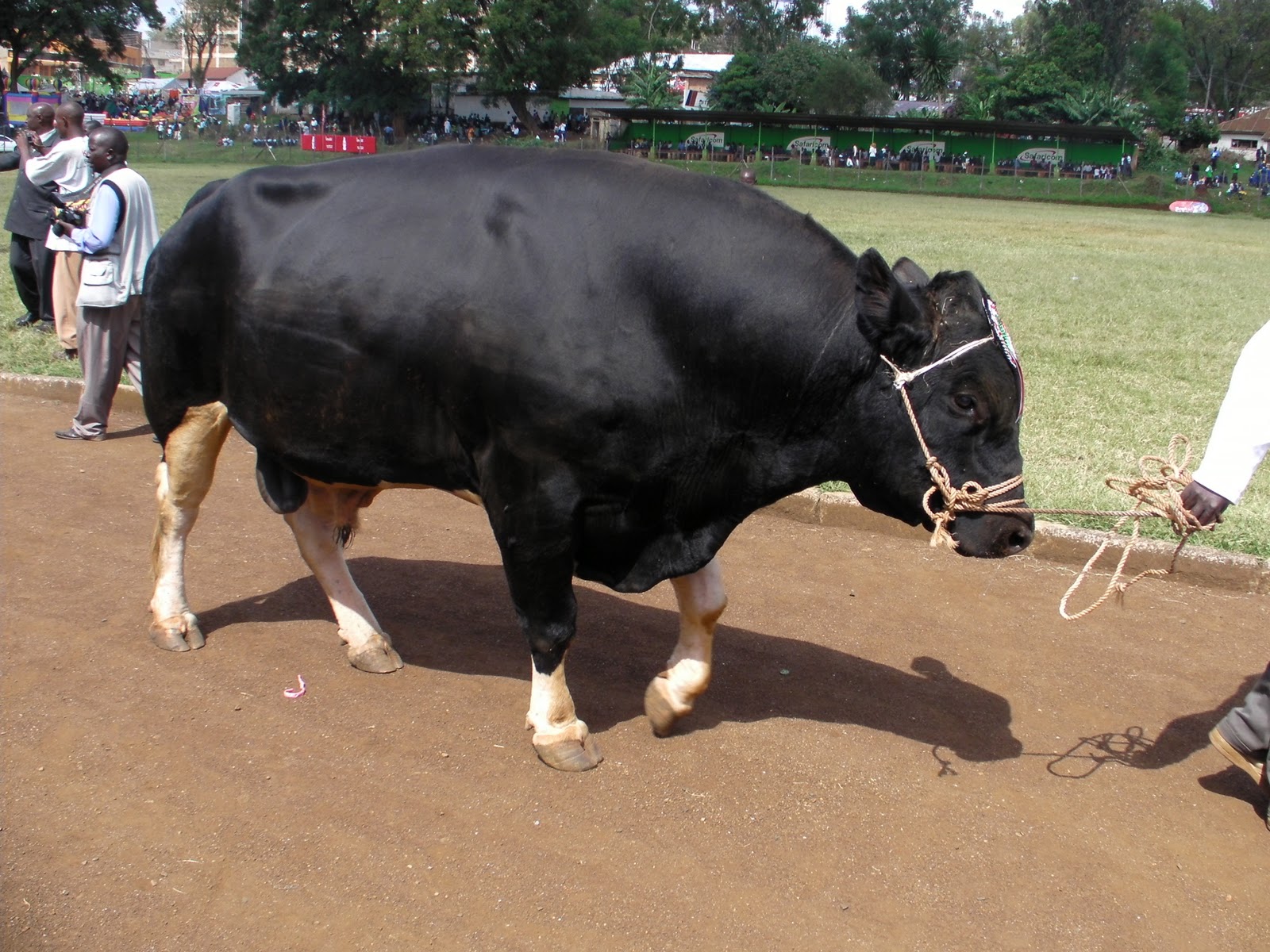
An exotic cow breed on display
If you fall in this category of farmers, a little advice is hereby available to cheaply transform your local breeds to be better yielding animals.
Instead of going for exotic animals directly which is a bit expensive, you can slowly transform you local breeds to desired exotic breeds by use of Artificial Insemination (AI).

An exotic goat breed on display
This is a scientific process of reproduction without use of a bull as most local farmers prefer. AI services are offered by qualified veterinary officers from livestock departments near you.
The advantage of using this service is that it prevents your animals from contacting diseases that the bull may be having and enable you choose which breed you want to upgrade to.

An exotic bull on display
The price per animal serviced ranges from $8 to $10 depending on location and the type of breed you want.
This will enable you as a farmer get better breeds as well as better yields in your farm avoiding inbreeding and disease inheriting.

Thursday, September 15, 2011

RAISING YOUR OWN SEEDLINGS IS EASY


It is common among farmers practice to buy seedlings for planting in their farms. Seed planting is common for plants like maize and beans.
For fruits and vegetables like kales, tomatoes and pawpaw, farmers can learn a few tips on nursery preparation and care avoid unnecessary expenditure in purchase of seedlings.

A section of land marked for nursery preparation
A nursery can be as long as you choose but its width should not exceed one meter. This is to facilitate ease of moving during weed removal and watering your seedlings once they sprout.
Ensure the soil is soft to facilitate easy root development and weeding when weeds strike.

A cross-section of a tree nursery
Your nursery should be in a cool place or you can prepare a shade for your sprouting seedlings as direct sunlight is likely to wither them.
The shade also helps prevent damage of your young seedlings from heavy downpour and hailstones.
Water your seedlings every morning and evening during dry seasons to ensure your seedlings have good enough water intake and root development as water softens the soil particles.

Ready polythene bags filled with soil for seedling preparation
Fence off your nursery from stray animals that may step on your nursery and spoil your seedlings.
Once your seedlings have fully sprouted, remove the shade to facilitate photosynthesis as your seedlings need more food for development.

A farmer collects seedlings for transplanting
Transfer your seedlings to the field at an appropriate time preferably during the rainy season to prevent them from drying due to disturbance.

Seedlings in polythene bags ready for transplanting
If you are transporting them to a distance field, it is advisable to use a polythene bag stand for each seedling and rear it before transplanting.